Introduction
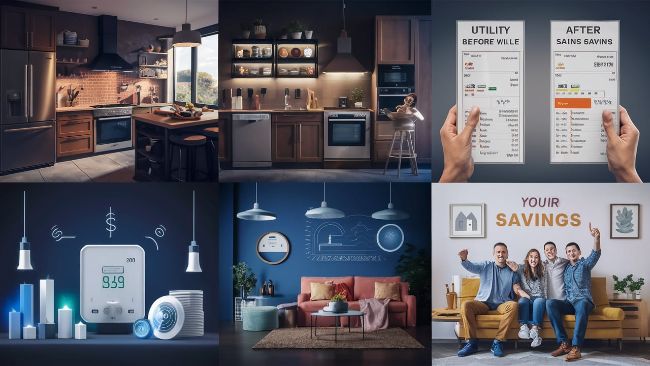
You’re going to be able to make use of smart technology in an extremely practical manner. These smart Ashley devices transcend traditional manual functions and use data driven technologies to automate basic home systems. Since this will greatly improve home efficiency, smart appliances will be of great value.
In this chapter, you will learn about the savings in maintenance cost, electricity, and water. Moreover, you will see handy appliances like smart washing machines and other devices like eco friendly appliances along with water saving technology. Also, real value case studies will be discussed to study and analyze the numbers for better understanding.
You will weigh the pros and cons in order to make a better choice. As a result of the above, you will be able to derive which smart appliance upgrades will perfectly suit your home. Moreover, you will learn about smart technology in home and office systems, the disparity of functions and government regulations and labels that serve for your protection. Cloud computing lets you and the other employees access data and files from the office server, and allows remote servers to access your office system in order to process and collate files.
When navigating today’s housing market, buyers are increasingly drawn to properties with smart home features and eco-friendly upgrades. Understanding local market shifts and emerging real estate trends can help both investors and first-time buyers make confident decisions while avoiding costly mistakes.
What Are Smart Appliances
Definition and Key Features
- Smart appliances are devices with connectivity (WiFi, Bluetooth, Zigbee).
- They have the ability to gather and supply data with ease.
- They autonomously alter their functioning based on the preset conditions (time, load, temperature)
- They allow remote access and controls (mobile and voice features).
- Holland has remote access robotic systems smart washing machines, refrigerators, and smart washing machines that are popular in the Chicago and resting thumb.
What Makes an Appliance “Smart”
- Equipped with sensors (Load or moisture or door sensors).
- Optimized for energy use (Auto shut-off or standby reduction).
- Configured for scheduled operation or dynamic pricing (Run when energy rates are lower).
- Feedback connection with the energy grid or an app.
How Smart Appliances Help Save Money
This section dis aggregates cost savings and how they are achieved.
Less Energy Waste
- Any powered devices that are unused still consume electricity and this is termed as standby power. Smart devices uses considerably less power. Those that are ENERGY STAR certified tend to turn off unimportant functions.
- Sensors find and eliminate over-dried, over-cooled and over-heated items. You would not want to heat empty rooms, wash very small loads, or waste electricity on inefficient cycles.
Demand Response & Time-of-Use Savings
- Numerous utility companies have time-window electricity rates. If you do the washing, drying or dish washing during off-peak times, the cost is less. Smart appliances are capable of self-scheduling.
- Demand is met and peak loads that many homes pull power at the same time are shed, avoiding the high tariff costs.
Water Saving Technology
- Smart washing machines simply can determine load and self-regulate water levels.
- Smart dishwashers can either rinse and recycle water or reduce water consumption.
- Water heaters that are smart only heat when really necessary and are capable of recovering heat in a more efficient manner.
Improved Configuration & Reduced Faults
- Smart appliances can do this more effectively because they send out alerts when filters or coils need cleaning, and avoid sending inefficient devices.
- Reduced breakdowns and the subsequent repairs are more expensive, which costs less over time. Replacing them less often saves more in the long term.
Evidence, Laws, and Guidelines That Support the Savings
- In order to understand the evidence, professional studies, and legal policies.
- Prominent policies regulating efficiency of appliances have documented evidence showing that they save as much as 15% of the national electricity consumption in several countries.
- In the United States for example, the Department of Energy’s Appliance and Equipment Standards Program, in 2024, for instance, saved consumers a whopping $105 billion. The Department estimates that appliances that do not meet efficiency standards, burden average American households by roughly $576 a year.
- Research suggests that smart home technology as a whole decreases overall energy consumption by 15-25%, with smart appliances often falling to the higher range of the percentage.
- Programs that certify appliances such as refrigerators, clothes washers, and clothes dryers, accomplish a specific efficiency standard. These appliances save energy which in turn helps to save money on energy bills.
Types of Smart Appliances and Their Opportunities for Savings
In this case, I will focus on particular types. You will get an idea of where you would implement this enhancement.
Smart Washing Machines
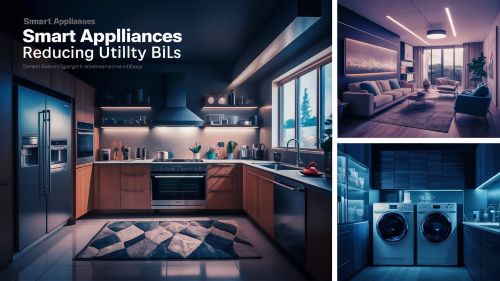
- Recognizes load quantity and type and tailors water and spin-cycle to match.
- Saves money on heating costs by using eco-modes to wash at lower temperatures.
- Can have daily off-peak scheduled washing.
Example: A smart washing machine might save 20-30% of water and electricity compared to an old manual one.
Smart Refrigerators & Freezers
- Enhancements in insulation and compressors.
- Sensory doors that notify users when left open.
- Allows users to check the interior and change cooling zones on some models.
Smart Thermostats & HVAC
- Nobody likes walking into a hot or a cold house.
- The house can learn the ever-changing schedule.
- The house can adjust based on the weather.
Smart Dishwashers
- Use the least amount of water and energy possible.
- Cycle settings during the off-peak period.
Smart bulbs, Smart Plugs & Energy Usage Trackers
- Smart bulbs with built-in sensors.
- Smart plugs that stop relay wakes.
- Energy usage trackers that allow self-monitoring of the highest energy users.
For sellers and investors, it’s important to master the basics of property flipping and strategies for maximizing rental ROI. Knowing how sustainable real estate gains value, planning for closing costs, and even learning how to sell a home by owner can make all the difference in achieving long-term success.
How to Pick Smart Appliances Aimed at Savings
In order to make a worthwhile investment, these steps should be taken.
- Assess current consumption.
- Research utility costs.
- Seek efficiency ratings of appliances.
- Assess smart functionalities.
- Estimate total life-cycle costs.
- Identify any available discounts or rebates.
- Design for interoperability and compatibility.
Case Studies & Examples
Case Study A: A Family Upgrading to Smart Appliances
Situation: A middle income household is equipped with:
- An old, outdated, non smart, standalone refrigerator.
- A non-automatic, traditional washing machine.
- An old, outdated, non smart, central HVAC system.
Change: They opt for smart:
- Refrigerators.
- Washing machines with smart eco-modes with load sensors.
- Smart thermostats.
Results (per year):
| Category | Before Annual Cost | After Annual Cost | Savings |
|---|
| Refrigerator electricity (kWh) | 600 | 350 | 250 (≈41%) |
| Loading & washing | water + electricity | reduced usage | ≈25-30% |
| HVAC (heating+cooling) | high peaks | smoother load | ≈10-15% |
They saved $400-$600/year on utilities in a temperate climate. Break-even for appliance upgrade was about 2-3 years.
Case Study B: Smart Washing Machines in Apartment Block
Setup: There were 50 units in an apartment block. There were washing machines in the laundry area, but the machines were not smart.
Change: Smart machines were installed with scheduling, sensors, and off-peak rules.
Outcome:
- Water usage decreased by 30%.
- Energy usage decreased by 25%.
- Savings on the utility bill: the entire building was able to save an aggregated $1,200/month.
Government Policies, Efficiency Standards & Labels
Minimum Energy Performance Standards (MEPS)
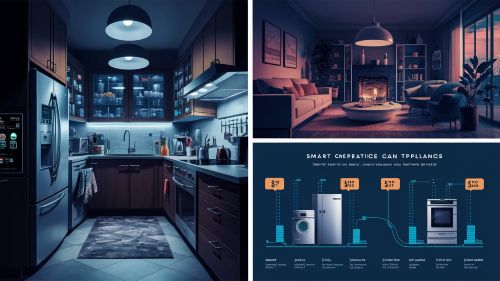
- In this case, the government uses MEPS to make sure that the models actualized by manufacturers are economical.
Labels and Certifications
- There are many different labels that different countries have which make it easier to identify devices that are eco friendly.
Incentives & Rebates
- Some governments and utility companies provide rebates for the purchasing of devices that save energy.
- There are cases where you may receive tax credits or discounts on your utility bill.
Policies Impacting Savings
- The rules that were set in place for the efficiency of appliances have saved households billions of dollars.
- There were policies that helped in the reduction of greenhouse gases which in turn lowered the overall bills.
Practical Tips to Maximize Savings Once You Have Smart Appliances
- Select optimal size
- Use eco or “economy” cycles
- Shift operation to off-peak hours
- Clear & service sensors, filters
- Track energy consumption
- Reduce phantom loads
- Adjust optimum settings
Real-World Dilemmas and Resolutions
More Expensive
Solution: Evaluate life-cycle cost.
Connectivity & Compatibility Problems
Solution: Use trusted companies.
Under utilization of Features
Solution: Consult instruction manual; activate features.
Data & Privacy Issues
Solution: Review privacy policies.
How Much Can You Actually Save? A Financial Breakdown
| Appliance | Typical Annual Cost (old model) | Smart / Efficient Model Cost | Elect./Water Saved | Estimated Savings/year |
|---|---|---|---|---|
| Refrigerator (old, 12 yrs) | $150 | $90 | ~40% energy saved | $60 |
| Smart washing machine | $100 (water + electricity) | $70 | ~30% saved | $30 |
| Smart thermostat managing HVAC | $1,200 | $1,020 | ~15% energy saved on heating/cooling | $180 |
| Smart dishwasher | $80 | $50 | Water plus electricity ~ 35-40% saved | $30 |
| Phantom loads (standby devices) | $50 | reduced to $10 | 80%+ reduction | $40 |
Example: Smart Appliances in Hot Climates vs Cooler Climates
- In hot climates, smart thermostats paired to smart ACs have large positive impacts.
- In cooler climates, smart ACs and thermostats have much lesser impact on cooling than heaters, smart insulations, and smart water heaters.
- Regions with greater water scarcity benefit more from water saving technologies than regions with abundant water supply.
Cross-Company Resource Link and Additional Tools
To learn more on the appliance versions and smart devices, you can check this site: HotProp for articles on eco friendly appliances, more in-depth reviews, and user-tips. Make sure to use the HotProp guides for cross checking the models you choose.
Q&A: Do Smart Appliances Save Money on Utility Bills
Q1: Do smart appliances always cost more initially?
Q2: How long does it take for smart appliances to self amortize?
Q3: How much smart appliances cost over time?
Q4: Are smart appliances functional with no power supply or internet connection?
Q5: Do smart appliances draw excess power due to always being on standby?
Q6: How do I track the savings from my smart appliances?
Final Thoughts and Conclusion
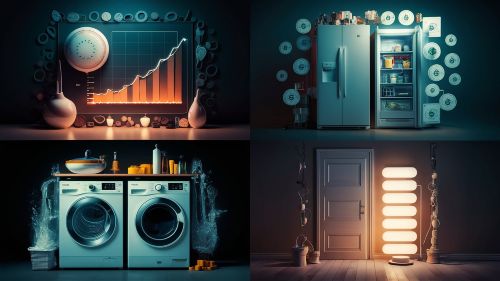
You understand that smart appliances and eco-friendly appliances can enable real savings. You are aware of water conserving technology. You understand the smart labels and the policies that underpin the standards and the savings. You understand pros and cons, case studies, and practical tips.
Prioritize the smart appliances that will offer the most significant savings. Keep your devices in good working condition. Track your usage of the smart features.