Introduction
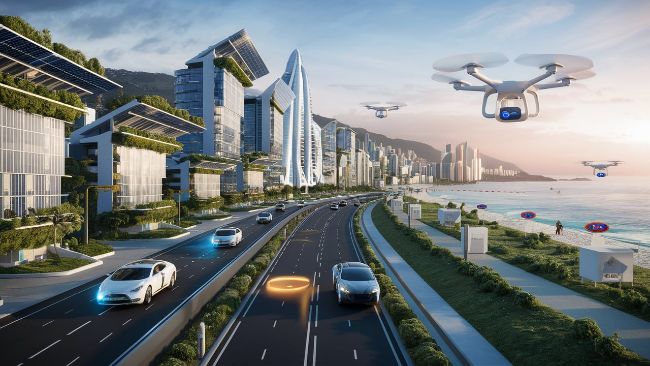
You would prefer homes that think, respond and learn. You would prefer ‘smart’ living. This article outlines real estate technology trends you can anticipate in homes of the future. You will understand the functions of proptech companies, the functionalities of smart building solutions, and the role of AI in real estate. You will get real examples, pros and cons, laws and stats. You will be in a better position as a buyer, investor, or innovator after you read this.
When navigating today’s housing market, buyers are increasingly drawn to properties with smart home features and eco-friendly upgrades. Understanding local market shifts and emerging real estate trends can help both investors and first-time buyers make confident decisions while avoiding costly mistakes.
What Are Smart Living & Future Homes
Definition: Smart Living
- Smart living is when technology is incorporated in your home to ease the performance of day-to-day activities.
- It utilizes a combination of sensors, automation, connectivity and x.
- It increases the levels of comfort, security and efficiency.
Definition: Future Homes
- Future homes combine smart sustainable design, renewable energy, and the Internet of Things.
- They learn your preferences and change affordably over time. They have less negative impact on the environment.
- They anticipate needs, like: lighting and temperature, as well as monitoring health.
Proptech Companies & Their Role
- “Proptech companies” refers to companies that employ different forms of technology to change how real estate is done.
- They design systems, platforms, sensors, and software to serve you.
- Some offer remote home management systems, while others focus on smarter construction for developers.
Emerging Real Estate Technologies You Should Know
The following are the key real estate tech trends influencing the future of smart homes and intelligent buildings today and in the future.
Trend 1: The Internet of Things (IoT) & Connected Devices
The number of IoT devices in people’s homes will continue to rise. Smart thermostats, lights, and locks will be able to converse with one another, learn usage patterns, and respond to commands via voice or app.
Trend 2: AI and Machine Learning
AI can assist in real estate with price predictions. In addition, AI can automate building systems, such as HVAC, lights, and security. The systems will learn preferences and will adjust accordingly.
Trend 3: Big Data & Predictive Analytics
Energy usage, occupancy, and maintenance requirements can be tracked. Data can help prevent system or equipment failures, which can help building designers enhance and improve their systems.
Trend 4: Energy Efficiency & Green Technologies
Smart building technologies such as solar panels and smart glazing, as well as efficient insulation, will be wanted by people. You will expect greater comfort, combined with decreased energy expenditures.
Trend 5: Automation & Smart Building Technologies
Smart locks, automated blinds, and enhanced elevators are examples of technologies that permit buildings to adjust lighting based on occupancy or to modify HVAC systems based on external conditions or occupancy.
Trend 6: Virtual & Augmented Reality
VR enables people to view or take a tour of their homes which are currently under construction. With AR, people can visualize the placement of furniture in a home before the furniture is purchased.
Trend 7: Blockchain and Smart Contracts
Within proptech, some companies use blockchain to verify record ownership. Smart contracts can automate payment of leases and escrow accounts.
Trend 8: Health, Safety, and Wellness Technology
These include sensors for air quality, UV cleaning systems, and contactless services. These budget items are expected to grow after the pandemic.
Stats to Back it Up
- By 2030, the market for smart homes is expected to grow considerably.
- By 2032, the market for smart homes in the United States is expected to grow several times.
These numbers tell you: consumers and builders alike will spend a lot of money on these trends.

For sellers and investors, it’s important to master the basics of property flipping and strategies for maximizing rental ROI. Knowing how sustainable real estate gains value, planning for closing costs, and even learning how to sell a home by owner can make all the difference in achieving long-term success.
How Smart Building Solutions Work: Step-By-Step Guide
For every analyzed case, you can implement a smart building solutions if you follow these steps.
1. Assess current status.
Systems inefficiencies, behavior, and energy use is measured.
2. Set goals.
Lower energy, improve safety and enhance comfort while reducing the billing costs.
3. Choose tech stack.
BMS, AI, and IoT sensors software.
4. Design integration.
Protocols Snap and Select for the devices to communicate (Zigbee, Z-Wave, Matter).
5. Install & test.
Works with certified installers while testing for reliability and commissioning devices.
6. Monitor & adjust.
Software is updated to fix anomalies with the analytics.
7. Maintenance & updates.
Ensure the replacement of the failing sensors while the firmware is updated and current.
Pros & Cons of Smart Living Technologies
Due to the balance that is provided with benefits and challenges, the case is positive.
Conclusion is that mitigation of the risks needs to be planned while the attention of the strong pros has to be kept.
Case Studies & Real-Life Examples
Smart living is building the living tailored to the needs. It is offered by these case studies.
Case Study A: Smart Building in Singapore
In the building, management IoT sensors use for light, cooling and humidity. It is estimated energy smart glazing and HVAC users notice by 20%. Comfort and noise is improved along with efficient.
Case Study B: PropTech Company Examples — Nest / Google
Nest manufactures smart thermostats that optimally heat and cool during particular scheduled times. Users report saving 10-12% on energy bills.
Case Study C: Municipality Code Upgrade. Energy Standards
In numerous countries energy codes on new builds (or major renovations) require green building practices. You will see improved insulation, triple glazing, and energy-efficient lighting as the new standard.
Case Study D: Regional Growth of Smart Home Market
In the Asia-Pacific, smart home adoption is the fastest growing due to increased income, urbanization, and smartphone usage.
How You Can Apply These Innovations
You can use these insights if you:
- Purchasing property. Sells and developers will customize a property with smart building technology on request.
- Construct and renovate. You only select technologies with positive ROI.
- Fund proptech startups. You analyze and assess the viability of the company’s business model.
Below are practical suggestions.
Practical Suggestion 1: Relatively Low Cost
Select windows, insulation, and HVAC with readily available incentives on purchase.
Practical Suggestion 2: Operational Focus Interoperability
Ensure that one of the devices can cross talk to another regardless of the same manufacturer level. Do not cross brand bind.
Practical Suggestion 3: Private and Public Charges Plan
Implement data encryption. Mandate system and firmware updates. Review the privacy policies of the devices.
Practical Suggestion 4: Holistic Consideration of Value
The initial capital in a project is usually high. It is important how the question of maintenance and replacement will be resolved. Support system will be budgeted in project funding.
Laws and Standards and the Government
You are obligated to know the elements of the legal “fence” that smart building solutions and AI in real estate operate within.
- Government policies on energy use and conservation in newly constructed buildings.
- Building Performance Standards that stipulates how existing buildings should work to meet target set energy goals.
- Certified buildings use and waste considerably less energy than their counterparts that are not certified.
These legal policies will set the level of technology developers will operate on. If not, they stand to lose permits, incentive, and a competitive position in the market.
Forthcoming Proptech Firms Revolutionizing the Industry
If you are keen on the latest technology, you can monitor these proptech companies.
- SmartRent – oversees the smart home systems automation for subscribers.
- Nest / Google – device and voice command interfaces.
- Schneider Electric, Siemens – integrated building systems for enterprises.
- Ring, Ecobee – integrated security and energy management systems.
Such companies lead the innovation technology trends in the real estate sector. They determine the extent of real estate artificial intelligence integration and use.
Financial Models and ROI of Smart Building Solutions
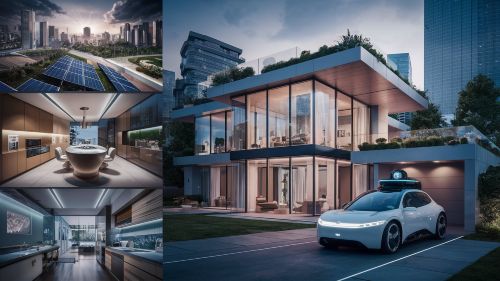
You will be interested in the capital flow in the real estate technology trends the smart living. Smart living systems require an initial investment, but the returns are greater.
- Smart HVAC has been shown to reduce energy expenditures by 20 – 30 percent.
- Water management systems have the potential to lower water cost by 15 – 25 percent.
- Homes with security systems often incur lower insurance premiums.
Sample ROI Calculation
You install $10,000 worth of smart technology. $2,000 in energy and insurance cost savings. Payback period is 5 years post investment. Any savings accrued beyond that is profit.
How AI in Real Estate Changes Your Everyday Life
Location-tailored ease
Other than increasing customer satisfaction, AI in real estate comfort uses machine learning algorithms to figure out your daily patterns, like, bathroom warming showers 10 minutes before you step in. Lights also dim out magically when it is TV time.
Checking Condition
AI can also determine when a certain HVAC machine might break down. Then you receive notifications. Maintenance can then be scheduled before any damages. This helps in reducing unnecessary costs.
Maximizing Profit
AI connects with your utility to determine which hours your energy is being used most. Then shifts it to per-determine energy saving hours. This can help save even more.
Community App
With AI, the condo lots or gated houses can have the automated systems with the shared amenities, where the security gates can open on their own, and the waste collection can be scheduled around the bins once they are full.
Advanced Case Studies of Smart Homes and Proptech Businesses
Self-sufficient Homes
Homes that utilize completely renewable energy, have batteries, and recycle water do not require much human input.
Digital Twins
A virtual model os your home is made by your developer. He then runs simulations to predict performance and upgrades.
Robotics
Instead of the old news robotic vacuums, imagine a world with robotic lawn mowers, or robots who can deliver packages inside the complex, or even windows that are able to clean themselves.
Health Monitoring
Advanced sensors are able to check the humidity, air quality, CO2 levels, and even pollen inside. Smart vents are also able to improve the overall health of the inhabitants, and even detect falls for old people.
Forecasts on Houses: The Year 2030 and The Years That Follow
You will see:
- Homes with electric vehicle (EV) charging points.
- Windows empowering homes with electric energy.
- Artificial Intelligence (AI) working for you to purchase energy at favorable rates.
- Smart system biophilic design.
- Voice and gesture control in all areas.
By the year 2035, proptech businesses would probably set up systemized “zero-carbon” homes for mass scale. It can be expected that governments will require compliance with energy performance regulations.
Challenges to Privacy and Security In Smart Living
You will also deal with risk.
- IoT devices can be gained entry by hackers.
- Data privacy, as well, can be infringed upon.
- An obsolete device can act as a weak point.
Ways to Reduce These Issues
- Use devices that are properly encrypted.
- Change all default passwords.
- Ensure that firmware is always current.
- Construct barriers within the home network.
Impact of Smart Living on Property Value
Today, smart building solutions come with a premium. Several studies indicate a preference toward smart homes. Homes that are equipped with smart systems tend to sell quicker.
Real estate agents, as well, market “smart features” as premium selling points. The systems make reselling the home advantageous.
Ways to Integrate Smart Technology in Homes
Most people believe that smart technology can only be applied in new homes. In fact, such technology can also be retrofitted.
- You can start with smart thermostats and lighting.
- Then move on to smart locks and security cameras.
- Finally, add air, water, and energy sensors.
Retrofit Hint
Start with devices that are wireless. These are easier to install since they do not require breaking down walls. Use systems that are designed for easy integration with other devices.
Reduction of Environmental Impact
Smart homes reduce greenhouse gas emissions. Water wastage is also minimized. Smart systems reduce the management of peak loads. Thus, more savings and reduction of greenhouse emissions.
Most Governments encourage such initiatives.
Simple Questions to Ask Yourself Before Investing in Smart Tech
- Determine what your objectives are (comfort, savings, security).
- Apple HomeKit, Google Home, Alexa and Matter all have their own unique device ecosystems.
- Research below.
- Account for long-term upkeep.
- Analyze ROI.
FAQ Section
What do you think real estate technology trends will be from 2025 and beyond?
What do you think the impact proptech companies have on buyers?
Are smart buildings solutions every costly?
How does real estate AI technology and solutions will protect my data?
What about retrofitting my old home to a future home?
Do smart homes add value to the property?

Conclusion: The Journey Towards Smart Living
You are aware, more than most people, how the future of houses is shaped by real estate technology trends, proptech companies, smart building solutions, and AI in real estate. This understanding should guide you in planning your investments and living smarter. Whether you choose to retrofit your current home or acquire a new one, you stand to gain from smart features. Watch for new regulations and incentives.
Smart living is here to stay. It not only cuts spending, but also enhances comfort, increases value of the property, and benefits the environment.
For a taste of real smart living and innovative structures, browse the internet property portals for listings and updates regarding the future of the real estate market.